

Best Shower Systems for Bathroom Renovations: A Practical Buyer’s Guide

Choosing the right shower system during a bathroom renovation is one of the most important decisions you’ll make. While tiles, tapware, and vanities define the look of the space, the shower system defines how the bathroom actually functions every day.
For Australian homeowners and renovators, the challenge isn’t a lack of options — it’s understanding which shower systems genuinely perform well long term, suit existing plumbing, and remain easy to live with after the renovation is complete.
This guide breaks down the best shower systems for bathroom renovations, explains what actually matters (and what doesn’t), and helps you avoid common mistakes that lead to regret, unnecessary costs, or ongoing maintenance issues.
Why Shower System Choice Matters in Renovations
A shower system is not a decorative item. It is:
Used multiple times every day
Directly connected to plumbing behind walls
Difficult and expensive to change once installed
The wrong shower system can result in:
Weak or uneven spray
Poor water pressure performance
Difficult cleaning and maintenance
Visible wear over time
Dissatisfaction long after the renovation is finished
The right system, on the other hand, delivers:
Comfortable, reliable daily use
Ease of cleaning
Consistent performance
Long-term satisfaction
This is why shower systems should be chosen early and deliberately in any renovation — not as a last-minute decision.
What Makes a Shower System Renovation-Friendly?
A renovation-friendly shower system typically:
Works with existing plumbing layouts
Requires minimal wall modification
Performs well across different water pressures
Is easy to clean and maintain
Uses durable materials and finishes
Systems that look impressive in showrooms but require extensive plumbing changes often cause budget blowouts and installation delays.
The Three Most Common Shower System Types in Renovations
1. Shower Rail Systems (Most Practical Choice)
Shower rail systems are the most commonly used shower systems in Australian renovations.
They feature a hand shower mounted on an adjustable vertical rail, allowing the height to be changed to suit different users.
Why Shower Rails Are Ideal for Renovations
Compatible with most existing plumbing
Minimal wall modifications required
Lower installation costs
Adjustable height for families
Reliable performance at varied water pressures
For most homes, shower rail systems offer the best balance of value, flexibility, and performance.
2. Twin Shower Systems (Luxury Upgrade Option)
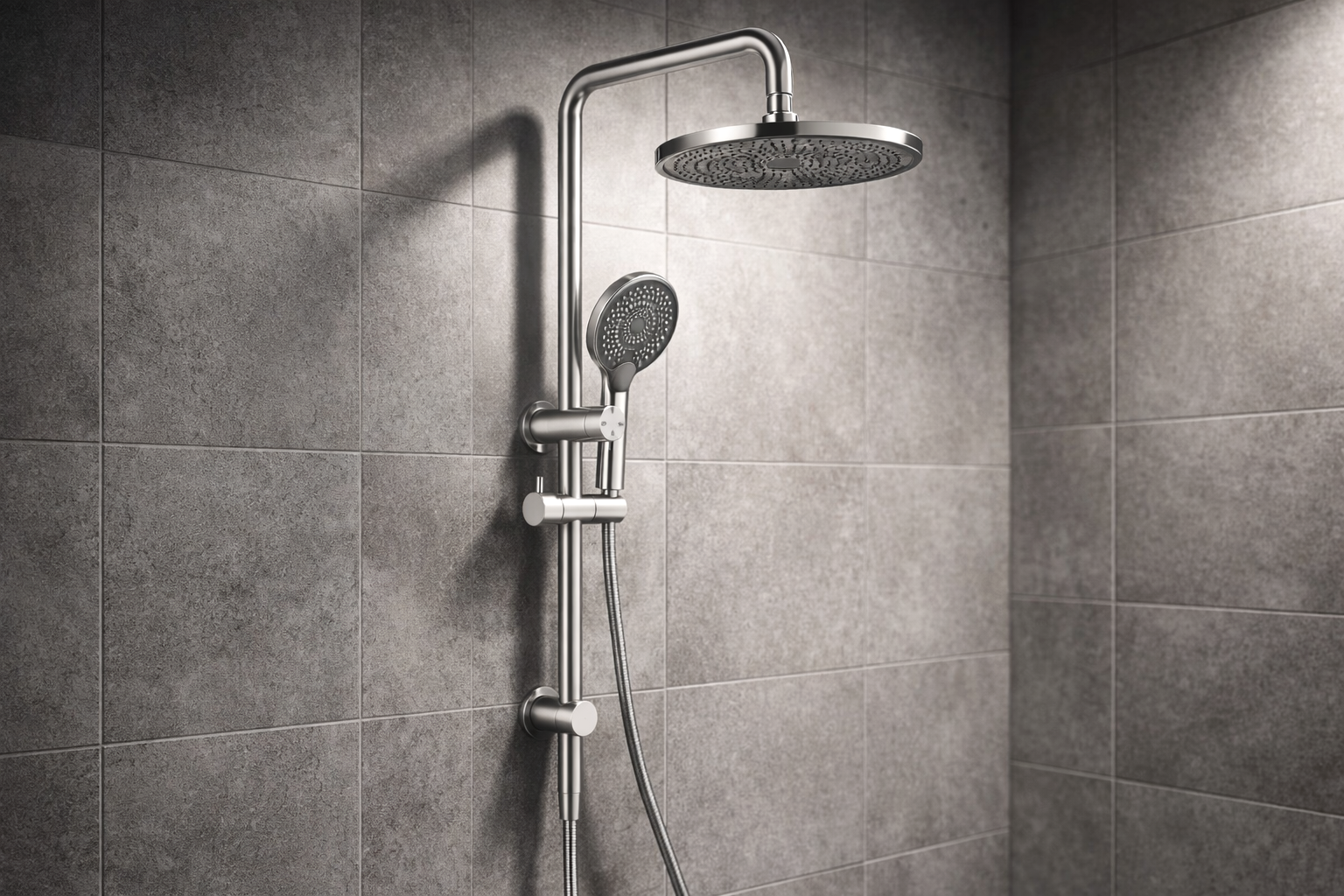
Lucito Twin Shower On Rail Brushed Stainless
Twin shower systems combine:
An overhead rainfall shower
A hand shower mounted on a rail
This allows users to switch between an immersive overhead shower and a practical hand shower.
When Twin Showers Make Sense
Full bathroom renovations
New builds
Larger bathrooms or ensuites
Homes with adequate water pressure
Twin showers offer a premium experience — but they require more planning and consideration than shower rails.
3. Overhead-Only Shower Systems (Generally Not Ideal)
Overhead-only rainfall showers can look sleek, but they are often less practical for everyday use, especially in renovations.
Common drawbacks include:
No flexibility for cleaning or rinsing
Poor performance at lower water pressure
Less suitable for families
Limited usability
For most renovations, a hand shower component is strongly recommended.
Water Pressure: The Deciding Factor Many People Miss
Water pressure plays a huge role in shower performance — yet it’s one of the most commonly overlooked factors when selecting a shower system.
Shower Systems That Handle Pressure Variations Well
Shower rail systems
Hand showers designed for efficiency
Systems That Require Strong Pressure
Large overhead rainfall showers
Some twin shower configurations
If pressure is limited, a system that is forgiving will deliver a far better daily experience than one that looks impressive but underperforms.
Twin Shower Handpieces: Why Design Matters More Than You Think
When choosing a twin shower system, most people focus on the overhead rainfall shower and overlook the handpiece design. This is a mistake — because the handpiece is often the most frequently used part of the system.
One design you’ll commonly encounter is the microphone-style handpiece.
What Is a Microphone Handpiece?
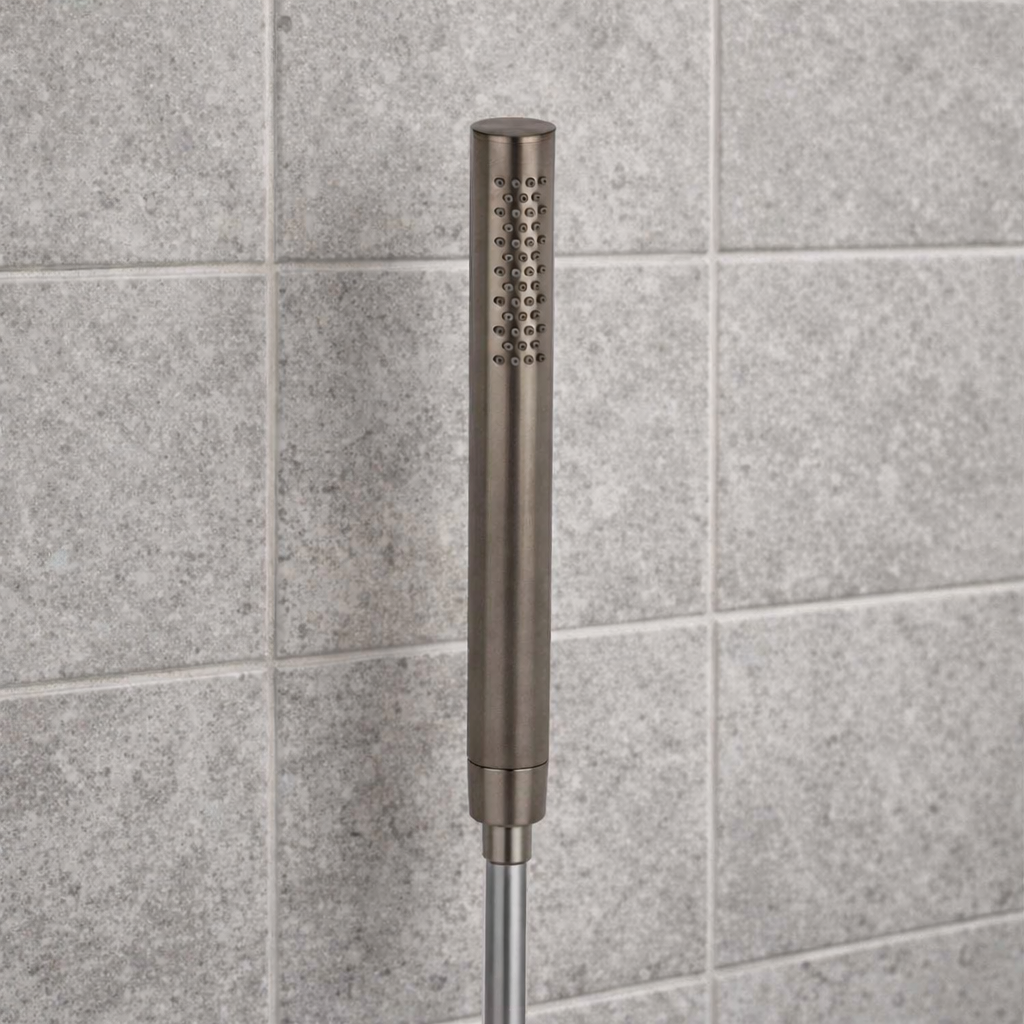
Microphone Shower Hand Piece
A microphone handpiece is a slim, cylindrical shower handset with a narrow spray outlet. These designs were popular years ago and are still used on some twin shower systems today.
While they may look minimalist, microphone handpieces are generally less practical than modern round handpieces.
Why Microphone Handpieces Are Not Ideal
Microphone handpieces typically:
Deliver a very narrow spray pattern
Provide limited water coverage
Feel less immersive and comfortable
Because the spray area is small, water is not distributed evenly across the body. This often results in a shower that feels underwhelming rather than luxurious, even when water pressure is adequate.
Common drawbacks include:
Longer rinse times
Reduced comfort
Less effective daily use
For these reasons, microphone handpieces are increasingly considered old-school designs that prioritise appearance over performance.
Why Round Handpieces Deliver a Better Experience
A round handpiece offers a wider spray face, resulting in:
Broader water coverage
More even spray distribution
A more comfortable shower experience
Round handpieces are simply more forgiving and better suited to everyday use in Australian homes.
The Best Option: Removable Round Handpiece with Multi-Function Spray
The most practical and modern choice for twin shower systems is a removable round handpiece with a multi-function spray pattern.
Key Benefits
Wider spray coverage
Multiple spray settings (e.g. rain, massage, mixed)
Better rinsing efficiency
Stronger perceived pressure
Greater versatility for daily use
Multi-function handpieces allow users to tailor the shower experience and are far superior to fixed, narrow spray designs.
Renovation Tip: Performance Beats Appearance
Microphone handpieces may look sleek in photos, but shower comfort matters far more than minimal aesthetics.
A twin shower should feel like an upgrade — not a compromise.
When choosing a twin shower system:
Prioritise spray coverage
Choose a round, multi-function handpiece
Ensure the handpiece is removable and practical
Finish Choices: Balancing Style and Durability
Finish selection plays a major role in how your shower system looks — and how it ages.
Popular finishes in Australian renovations include:
Chrome
Matte black
Brushed brass
Gunmetal
What matters most is how the finish is applied, not just the colour.
Powder-Coated Finishes (Use with Caution)
Powder-coated finishes can:
Scratch or chip
Fade over time
Wear quickly in high-use showers
Electroplated and PVD Finishes (Preferred)
Electroplated and PVD finishes offer:
Better durability
Improved colour stability
Longer lifespan
This is especially important for darker finishes like matte black or gunmetal.
Shower Head Face Colour: A Small Detail That Makes a Big Difference
One often-overlooked detail is the colour and material of the shower head face, particularly around the spray nozzles.
While matching the shower head body to tapware finishes is important, the face of the shower head has a major impact on long-term appearance and maintenance.
Why Calcium Build-Up Is a Real Issue in Australia
Many Australian homes have mineral-rich water, which leads to calcium and limescale build-up over time.
This build-up:
Reduces spray performance
Becomes visually obvious
Requires frequent cleaning
How noticeable and manageable this build-up is depends on the shower head face material and colour.
The Problem with Coloured Shower Head Faces
Shower heads with coloured metal faces (such as brushed brass or gunmetal faces) tend to show calcium build-up more clearly.
Over time:
White deposits contrast strongly against coloured surfaces
Build-up forms around individual nozzles
The shower head can look dirty even when clean
The issue is that aggressive cleaning can:
Damage colour coatings
Cause fading or uneven wear
Shorten the life of the finish
Why Grey or Black ABS Shower Head Faces Are the Smarter Choice
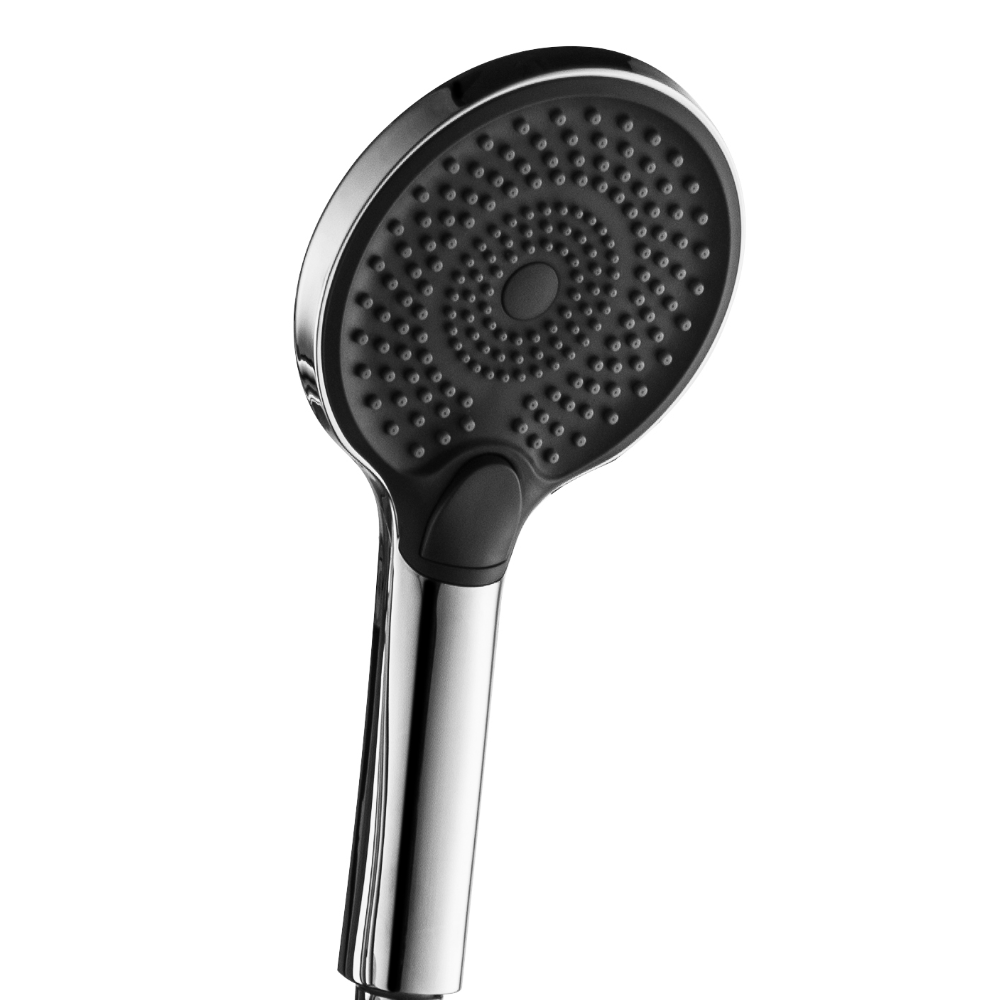
Lucito Shower Hand Piece
Shower heads with grey or black ABS faces offer clear long-term advantages:
Calcium build-up is far less visible
Easier to clean gently
No risk of damaging colour coatings
More forgiving in hard-water areas
Maintain a cleaner appearance over time
A smart renovation choice is selecting a system where:
The body matches your tapware finish
The shower head face is grey or black ABS
This delivers both style and practicality.
Best Shower Systems for Small Bathroom Renovations
In small bathrooms, simplicity and usability matter most.
Recommended Features
Shower rail systems
Compact hand showers
Adjustable height rails
Chrome or lighter finishes
Shower rails help avoid visual clutter and perform well in tighter spaces.
Best Shower Systems for Family Bathrooms
For family bathrooms, practicality outweighs luxury.
Shower rail systems are ideal because:
Adjustable height suits all users
Easier to clean
More durable in daily use
Reliable at varied water pressures
Twin showers are better suited to adult ensuites.
Best Shower Systems for Ensuites and Master Bathrooms
Ensuites allow more freedom in design.
Ideal options include:
Twin shower systems
Overhead rainfall showers paired with hand showers
Statement finishes like matte black or brushed brass
These spaces benefit from a more luxurious approach when plumbing allows.
Bundles: The Smartest Way to Maximise Value
Choosing shower system bundles is one of the easiest ways to improve value.
Common bundles include:
Wall mixer + shower rail
Wall mixer + twin shower system
Why Bundles Make Sense
Lower overall cost
Guaranteed finish matching
Simplified decision-making
Reduced risk of incompatibility
Bundles are especially valuable in renovations.
Common Mistakes to Avoid
Choosing style over performance
Ignoring water pressure limitations
Selecting microphone handpieces for daily-use showers
Choosing coloured shower head faces in hard-water areas
Mixing finishes unintentionally
Avoiding these mistakes saves money and frustration long term.
How to Choose the Best Shower System for Your Renovation
Ask yourself:
Is this a partial renovation or full rebuild?
What water pressure do I have?
Who will use this shower daily?
Do I value flexibility or luxury more?
How easy will this be to clean after a year?
The best shower system answers these questions honestly.
Final Verdict: What Is the Best Shower System for Renovations?
For most renovations:
Shower rail systems deliver the best value, flexibility, and reliability
Twin shower systems suit full renovations and luxury-focused spaces
Choosing quality materials, durable finishes, practical handpieces, and easy-clean shower faces ensures your shower performs well long after installation.
Ready to Choose the Right Shower System?
Whether you’re renovating a family bathroom or upgrading an ensuite, the right shower system makes all the difference.
👉 Explore affordable luxury shower systems and renovation-ready bundles at BathroomDeals.au and choose with confidence.
Frequent Asked Questions - Best Shower Systems For Bathroom Renovations
-
For most renovations, shower rail systems are the best choice because they work with existing plumbing, perform well at varied water pressure, and are easy to maintain.
-
Yes, when they include a removable round handpiece with a multi-function spray. Twin showers with microphone handpieces are generally less practical.
-
Microphone handpieces have a narrow spray pattern and limited coverage, resulting in a less comfortable shower experience compared to round handpieces.
-
Coloured metal shower head faces show calcium build-up more clearly. Grey or black ABS faces hide build-up better and are easier to clean without damaging finishes.
-
Yes. Matching finishes across tapware, shower systems, and accessories creates a cohesive, high-end bathroom look.
