

Australian Kitchen Renovation
If you are planning a kitchen renovation in 2026, you have likely seen the debate: handmade vs pressed kitchen sinks. Both are stainless steel kitchen sinks, but the difference in build quality, price, and durability is significant. We are breaking down handmade kitchen sinks versus pressed kitchen sinks to help you choose the best kitchen sink for renovations in Australia. This guide cuts through the generic advice and tells you exactly which sink type is the smarter investment for an Australian kitchen renovation in 2026, covering local building standards, noise concerns, and long-term value. We focus exclusively on stainless steel sinks, the dominant material in the Australian market, and compare the two primary manufacturing methods. We will not cover composite or fireclay sinks here.
Table of Contents
What’s the Difference? The Manufacturing Process Explained
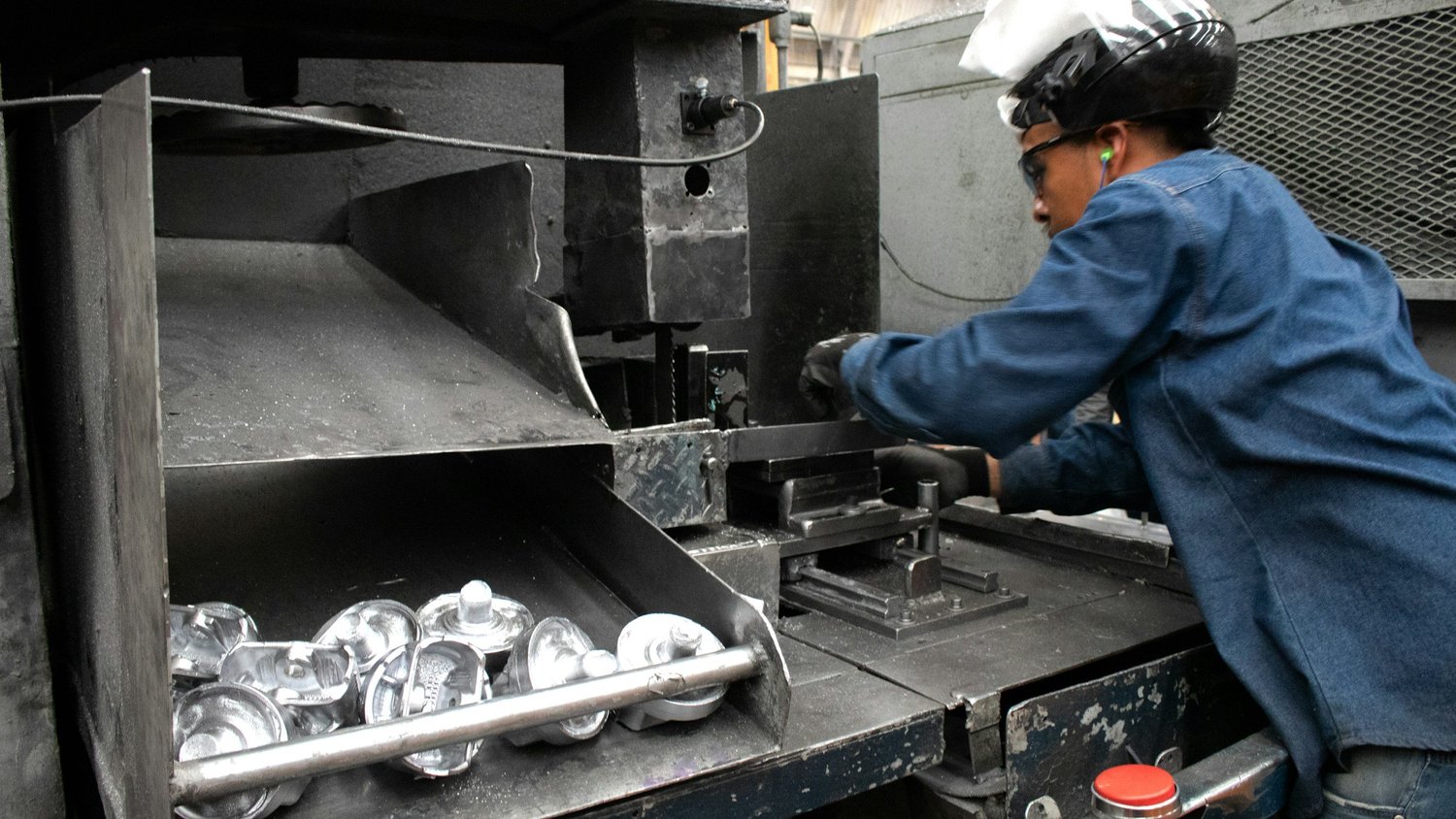
The fundamental difference between a pressed sink and a handmade sink comes down to how the steel is shaped. Understanding this process is the first step in making an informed choice.
Pressed sinks, also known as drawn sinks, are manufactured using a hydraulic press. A single flat sheet of stainless steel is placed over a die, and a powerful press forces the metal into the shape of a sink bowl in one rapid motion. This process is highly automated, fast, and requires minimal human labour. Because the bowl is stretched from a single piece of steel, there are no seams or welds in the basin itself. The result is a seamless bowl with soft, flowing lines. The speed and efficiency of this method make it the standard for mass-produced, budget-friendly sinks.
Handmade sinks follow a completely different production path. A fabricator starts with flat sheets of steel, cutting them to precise measurements for the base, sides, and back of the sink. These pieces are then joined together by hand using TIG welding. Once the shell is assembled, the welds are ground down and polished until they become invisible to the naked eye, creating the appearance of a seamless corner. This labour-intensive process demands skilled craftsmanship and takes significantly more time than machine pressing. The payoff is the ability to work with much thicker steel and achieve sharp, architectural lines that a press simply cannot produce.
The most immediate visual distinction between the two types is the corner radius. Handmade sinks have tight, crisp corners, typically with a radius between R5 and R10. This creates a modern, boxy profile. Pressed sinks, by the nature of the stretching process, must have softer, sloping corners with a radius of R15 or larger. In the Australian market, most budget-friendly sinks found in big-box hardware stores like Bunnings are pressed sinks. Handmade sinks are typically sourced through specialist kitchen suppliers, high-end showrooms, or boutique online retailers.
Material Quality and Gauge: Why Thickness Matters in 2026
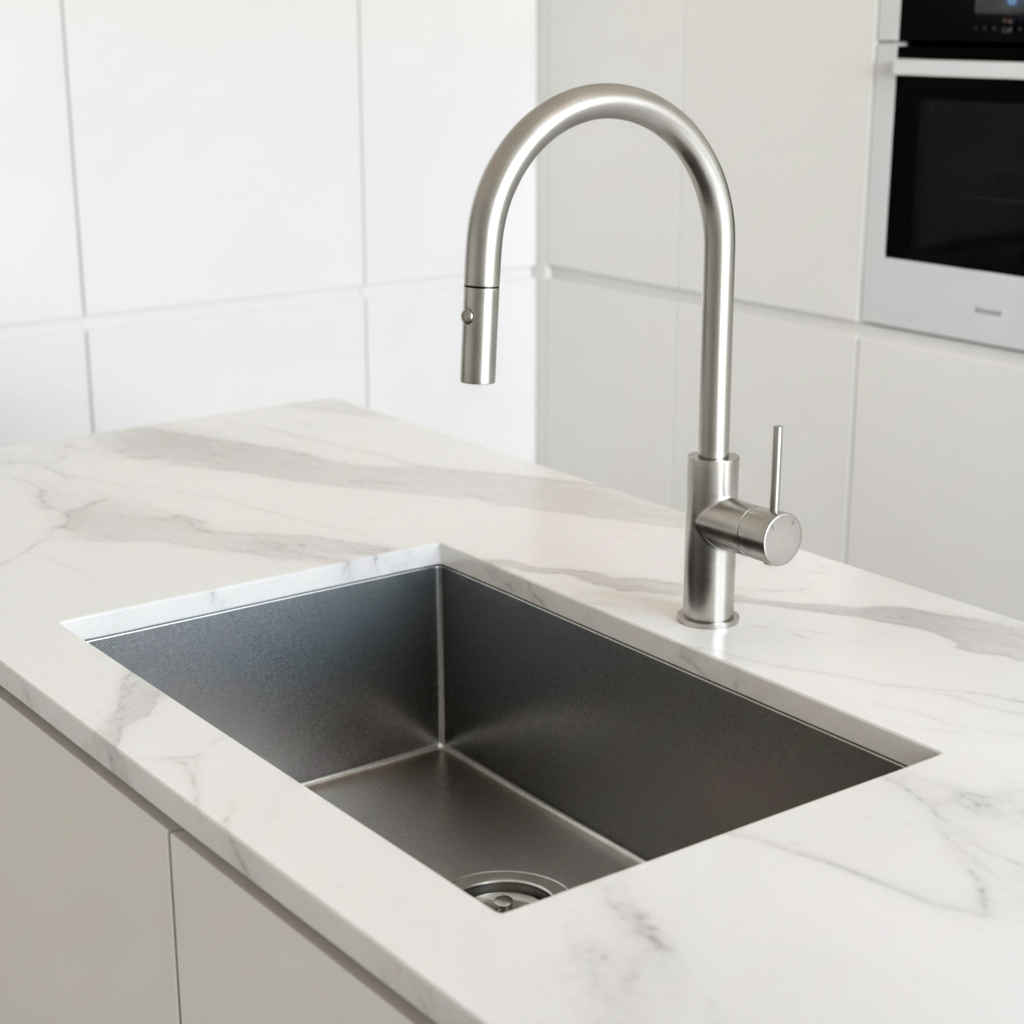
When comparing stainless steel sinks, the gauge of the steel is the single most critical specification to understand. The gauge number operates on an inverse scale: a lower number means a thicker, stronger sheet of steel. Handmade sinks are built from thicker stock because the welding and grinding process requires structural integrity that thin metal cannot provide. The industry standard for a quality handmade sink is 16-gauge steel, which measures 1.6 millimetres thick. Premium handmade sinks can go even thicker, up to 3.0 millimetres. Pressed sinks, by contrast, must use thinner steel because a hydraulic press cannot cleanly form thick metal into a deep bowl without tearing or weakening the material. Most pressed sinks use 18-gauge steel at 1.2 millimetres, and budget imports can drop to 20-gauge or even 22-gauge, which is a flimsy 0.8 millimetres.
Beyond thickness, the grade of stainless steel is non-negotiable. Both handmade and pressed sinks should be fabricated from Grade 304 stainless steel, often stamped as 18/10. This designation means the alloy contains 18 percent chromium and 10 percent nickel. The chromium creates a passive layer on the surface that resists oxidation and corrosion, while the nickel adds strength and lustre. For Australian homes, where hard water is common across many regions, Grade 304 is essential. Cheaper imported sinks, particularly pressed models from unverified manufacturers, sometimes use Grade 201 stainless steel. Grade 201 contains less nickel and more manganese, making it cheaper to produce but far more susceptible to rust and pitting when exposed to the minerals and salts present in Australian tap water.
The practical consequence of thicker steel is dent resistance. A 16-gauge handmade sink will shrug off the impact of a dropped cast-iron pot or a heavy roasting pan. A 22-gauge pressed sink can dent during installation if a tradie leans on it the wrong way, let alone during years of daily use. Thicker steel also provides a natural sound-dampening benefit. Thin metal vibrates like a drum skin when water hits it. High-quality handmade sinks address noise further by applying heavy rubber sound-dampening pads and a sprayed undercoating to the exterior of the bowl. These additions absorb vibration and deaden the clatter of dishes and running water, making the sink significantly quieter than a standard pressed model with no such treatment.
The “Dropped Pot” Test: Handmade vs Pressed Durability
The ultimate real-world test for a kitchen sink is what happens when a heavy object falls into it. A 16-gauge handmade sink can withstand a significant impact without permanent deformation. The thick steel and rigid welded structure absorb and distribute the force. A thin pressed sink, particularly one under 1.0 millimetre, tells a different story. Such sinks are prone to a phenomenon called oil canning, where the flat surfaces develop wavy distortions that pop in and out under pressure. A dropped pot can leave a visible, permanent dent that cannot be pulled out. For busy family kitchens in Australia, where the sink is a workstation for everything from rinsing veggies to scrubbing barbecue grates, the durability of a handmade sink is a major selling point that justifies its higher price tag.
Aesthetics and Installation: Which Fits Your Kitchen Style?
The visual language of your kitchen will heavily influence which sink type feels right. Handmade sinks, with their tight R5 to R10 corner radii, deliver a sharp, minimalist, architectural look. This aesthetic pairs perfectly with the clean lines of modern and contemporary Australian kitchen design, where flat-front cabinetry and stone benchtops dominate. Pressed sinks, with their softer R15 and larger corners, read as more traditional or transitional. The gentle slopes of the bowl are less assertive and blend into classic kitchen styles more readily.
Mounting style is another consideration where both sink types offer flexibility, but with a key distinction. Both handmade and pressed sinks are available in topmount and undermount configurations. However, the current trend in high-end Australian renovations is the flushmount, or zero-reveal, installation. In this setup, the sink rim sits perfectly level with the benchtop surface, creating a seamless transition from stone to steel. The precision manufacturing and rigid structure of a handmade sink make it the preferred choice for flushmount installations. A pressed sink, with its potential for slight warping from the stamping process, is harder to align perfectly with a stone benchtop.
Cabinet size compatibility is an area where pressed sinks hold a practical advantage. Because they are mass-produced, pressed sinks are standardised to fit common Australian base cabinet sizes, such as 600 millimetre and 900 millimetre units. If you are doing a straightforward replacement without altering cabinetry, a pressed sink will likely slot right in. Handmade sinks, especially larger double-bowl or farmhouse apron-front styles, often require custom cabinetry or modifications to existing frames. This adds cost and complexity to the renovation.
Scratch visibility is the final aesthetic factor worth noting. All stainless steel sinks will scratch with use. The key is how those scratches read visually. Handmade sinks typically feature a brushed satin finish, which has a directional grain that naturally camouflages fine scratches and wear marks. Many pressed sinks, particularly at the lower end of the market, have a higher-gloss polished finish that shows every scratch and water spot. Over time, a brushed handmade sink will develop a consistent patina, while a polished pressed sink can look tired and marked.
The Price vs Value Equation for Australian Homeowners
Upfront cost is where the two sink types diverge most dramatically. A pressed stainless steel sink can be purchased for as little as $150 and rarely exceeds $500, even for a large double-bowl model from a recognised brand. A handmade sink is a premium product. Entry-level handmade sinks from reputable suppliers start around $600, and prices climb to $2,000 or more for large, custom-configured models with integrated drainboards or specialised finishes. This price gap is the primary reason pressed sinks dominate the volume end of the market.
The value equation, however, flips when you consider the lifespan of the product. A high-quality 16-gauge handmade sink is a once-per-renovation purchase. It will easily last 20 years or more, often outliving the kitchen itself. A cheap pressed sink, particularly one under 1.2 millimetres thick, may show significant wear, dents, or even rust spotting around the drain after five to ten years. Replacing a sink mid-cycle is a messy, costly job that can involve disturbing the benchtop and plumbing. The money saved upfront on a pressed sink can evaporate if replacement is needed while the rest of the kitchen is still in good condition.
For homeowners planning to sell, a quality handmade sink functions as a feature that buyers notice during an open inspection. It signals a considered, high-quality renovation rather than a cosmetic flip. Real estate agents in competitive Australian markets often highlight premium kitchen fixtures in their listings. The installation cost for both sink types is broadly similar, as the plumber’s labour is the dominant expense. However, a very heavy handmade sink, particularly a large double-bowl model, may require additional reinforcement of the benchtop substrate or cabinet structure. This can add $100 to $200 to the installation bill, a minor incremental cost in the context of a full kitchen renovation.
The Australian Angle: Regulations, Climate, and Brands
The Australian plumbing standard AS/NZS 3500 governs water services and sanitary plumbing, but it does not mandate a specific thickness for kitchen sinks. Compliance is about the connection and drainage, not the gauge of the steel. This regulatory gap means the burden of choosing a durable product falls entirely on the consumer. A thicker sink is inherently less likely to warp or flex under the weight of a full basin of water and a stack of dishes, a practical consideration that goes beyond the letter of the standard.
Australia’s water quality adds another layer of importance to material selection. Much of the country has hard water, with high mineral content that can be corrosive to inferior metals. Grade 304 stainless steel is the minimum acceptable standard for a sink that will be exposed to Australian tap water daily. The risk of choosing a cheaper Grade 201 sink is not hypothetical. Rust spots can appear within months, particularly around the drain area where water sits and minerals concentrate. This is a common failure point for no-name pressed sinks imported without quality certification.
When shopping for a handmade sink in Australia, look for brands with a local presence and a reputation to protect. Oliveri and Abey are two established Australian names that offer handmade stainless steel sinks alongside their broader product ranges. Several boutique importers also supply high-quality handmade sinks, often sourcing from specialist fabricators in Europe or Asia that meet Australian quality expectations. The key is to verify the grade and gauge before purchasing. Generic pressed sinks from big-box retailers will typically state their specifications on the packaging, but if a sink seems suspiciously light or the packaging avoids mentioning the grade, assume it is not 304.
Warranty terms reveal how much confidence a manufacturer has in its product. Reputable handmade sink brands routinely back their products with a lifetime warranty against manufacturing defects. This warranty reflects the reality that a properly made 16-gauge 304-grade sink has no predictable failure point. Pressed sinks from mass-market brands typically carry warranties of one to five years. Some budget imports carry no meaningful warranty at all, making them a gamble that is hard to justify when the cost of failure includes water damage to cabinetry.
Which One Should You Choose? A Decision Framework for 2026
The right choice depends on your budget, your cooking habits, your design preferences, and how long you plan to stay in your home. Here is a straightforward framework to guide your decision.
Choose a handmade sink if you are undertaking a high-end renovation where quality is the priority over cost. If you cook daily with heavy pots, cast-iron pans, and large roasting trays, the dent resistance of 16-gauge steel will matter every day. Choose handmade if you want a quiet sink that does not amplify the sound of running water and clattering dishes. If your kitchen design calls for a modern aesthetic with sharp, architectural lines and a flushmount installation, a handmade sink is the only way to achieve that look. Choose handmade if you plan to stay in your home for ten years or more and want to install the sink once and forget about it.
Choose a pressed sink if you are working to a strict budget and need to allocate funds to other parts of the renovation, such as appliances or cabinetry. If you are renovating a rental property, a holiday house, or a low-use kitchen where the sink will not face daily heavy-duty use, a pressed sink is a pragmatic choice. Choose pressed if you genuinely prefer the look of softer, rounded corners, or if you need a standard size to fit an existing cabinet cutout without modification.
For most Australian kitchen renovations in 2026, the sweet spot is a 16-gauge, 304-grade handmade sink. It offers the best balance of durability, aesthetics, and long-term value. If your budget simply cannot stretch to a handmade model, set a firm minimum for any pressed sink you consider: do not buy anything thinner than 1.2 millimetres, which is 18-gauge. Anything thinner is a false economy that will cost more in the long run.
Frequently Asked Questions
Are handmade sinks worth the extra cost?
Yes, for the durability, noise reduction, and superior aesthetic. The cost is justified by the lifespan. A handmade sink will last 20 to 30 years or more, while a cheap pressed sink may need replacement within a decade. Spread the cost difference over that lifespan, and the annual premium is negligible.
Do pressed sinks dent easily?
Yes, particularly those under 1.0 millimetre thickness. Dropping a heavy cast-iron pan or a full stockpot can cause a permanent dent in a thin pressed sink. Once the metal is deformed, it cannot be pulled back to its original shape.
What gauge stainless steel is best for a kitchen sink?
16-gauge, which is 1.6 millimetres thick, is the industry standard for premium sinks. It offers excellent dent resistance and structural rigidity. 18-gauge at 1.2 millimetres is the minimum acceptable thickness for a mid-range pressed sink. Avoid anything thinner.
Can you repair a scratched pressed sink?
Light surface scratches can be buffed out with a non-abrasive stainless steel cleaner and a soft cloth, following the grain of the metal. Deep scratches that catch a fingernail are permanent. Handmade sinks with a brushed satin finish hide everyday wear and tear far better than the polished finishes on cheaper pressed sinks.
How long do handmade sinks last?
With proper care and cleaning using non-abrasive products, a quality handmade 304-grade stainless steel sink can last 20 to 30 years or more. It is not uncommon for a handmade sink to outlast the kitchen renovation in which it was installed.
Final Verdict: The Best Kitchen Sink for Your Renovation
The choice between a handmade and a pressed stainless steel kitchen sink comes down to a single trade-off: price versus longevity. A pressed sink saves you money today. A handmade sink saves you money over the long term by eliminating the need for replacement and by standing up to the daily demands of a working Australian kitchen. There is no wrong answer, but there is a clear hierarchy of quality. If your budget allows, choose a 16-gauge, 304-grade handmade sink and you will never think about your kitchen sink again. If you must choose pressed, hold the line at 18-gauge and verify the grade.
We encourage you to visit the Bathroom Deals showroom or browse our online catalogue to see and feel the difference in thickness and finish for yourself. Pick up a pressed sink and tap the bowl, then do the same with a handmade model. The difference in weight, rigidity, and sound will tell you more than any article can. Whether you choose a handmade kitchen sink for its premium build or a pressed kitchen sink for its affordability, ensure it is Grade 304 stainless steel. It is the single most important factor for the best kitchen sink for renovations in Australia.
Shop the range
Everything in this guide is available from our kitchen and butler sinks range — bought direct from the manufacturer, held in Australian stock and dispatched from Acacia Ridge within one to two business days.
- Forio Quartz Small Single Bowl Sink White — $649.00
- Forio Quartz Single Bowl Butler Sink Matt White — $1499.00
- Kalina Single Bowl Undermount Sink — $205.00
Not sure which suits your bathroom? Ask us and we will price a matched set for the whole room, or read our delivery information before you order.