

What Size Kitchen Sink Should I Choose? A Complete Guide for Australian Homes (2026)
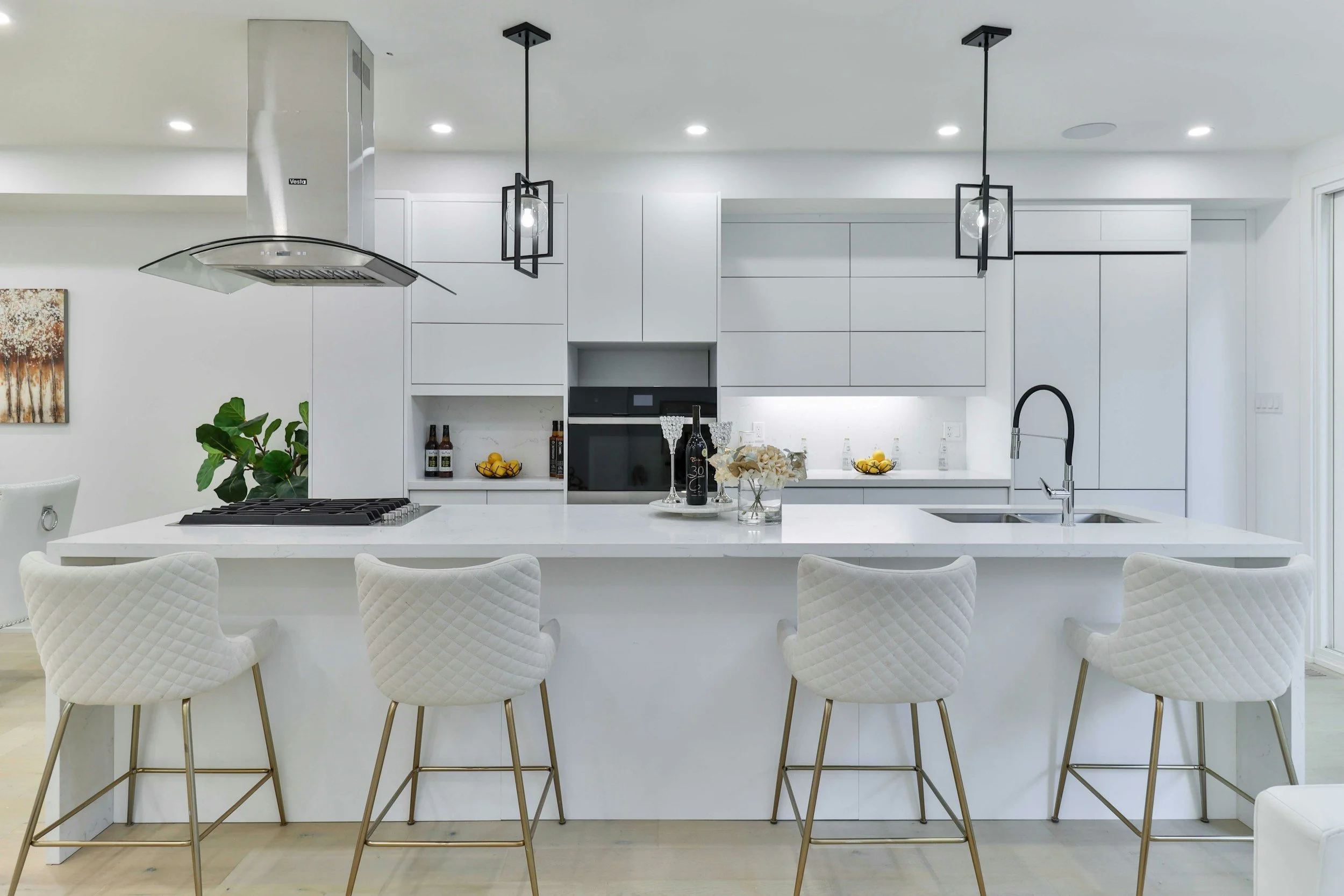
If you are searching for a kitchen sink size guide because you are asking yourself what size kitchen sink should I choose, you have come to the right place. This guide is written specifically for Australian homes, covering standard kitchen sink sizes Australia suppliers work with every day, the exact kitchen sink dimensions you need to measure, and the growing trend toward the large single bowl kitchen sink in modern renovations. By the time you finish reading, you will know precisely which sink fits your benchtop, your cooking style, and your budget, without making a mistake that costs you hundreds of dollars to fix.
Table of Contents
Single vs. Double vs. 1.5 Bowl: Which Configuration Is Right for You?
Material Matters: How Your Choice Affects Size and Durability
Why Sink Size Matters More Than You Think
The kitchen sink is the single most-used workstation in your home. You fill pots at it, drain pasta over it, wash vegetables in it, scrub baking trays across it, and stack dirty dishes beside it. Get the size wrong and you create daily frustration: water splashing onto the floor because the bowl is too shallow, a roasting pan wedged diagonally because the sink is too narrow, or persistent lower back pain because you are stooping into an excessively deep basin.

A sink that is too large dominates a small benchtop and steals precious preparation space. A sink that is too small forces awkward washing gymnastics every time you host a family dinner. In Australian homes, standard cabinet widths, typically 600mm, 900mm, and 1200mm, dictate the maximum sink size you can install. You cannot simply drop a 900mm sink into a 600mm cabinet and hope for the best.
The right size improves workflow, reduces benchtop clutter, and can even increase resale value when prospective buyers see a practical, well-proportioned kitchen. There is also a design dimension worth considering early: sink-to-window proportioning. Aligning the width of your sink with the window above it creates a balanced, intentional look that feels right the moment you walk into the room. A narrow sink under a wide window looks lost; an oversized sink under a small window feels cramped. These proportions matter.
Understanding Standard Kitchen Sink Sizes in Australia
Australian kitchen sink dimensions follow conventions shaped by decades of local cabinetry standards and the realities of how we cook and clean. While custom sizes exist, most sinks fall into predictable ranges that make replacement and new-build specification straightforward.
Single Bowl Sink Dimensions
The standard single bowl kitchen sink size in Australia ranges from 550mm to 600mm in length, with widths around 500mm and depths of approximately 200mm. This is the workhorse sink found in countless Australian apartments, townhouses, and family homes. It fits neatly into a standard 600mm cabinet, leaves room for plumbing and a bin underneath, and handles daily washing tasks without fuss.
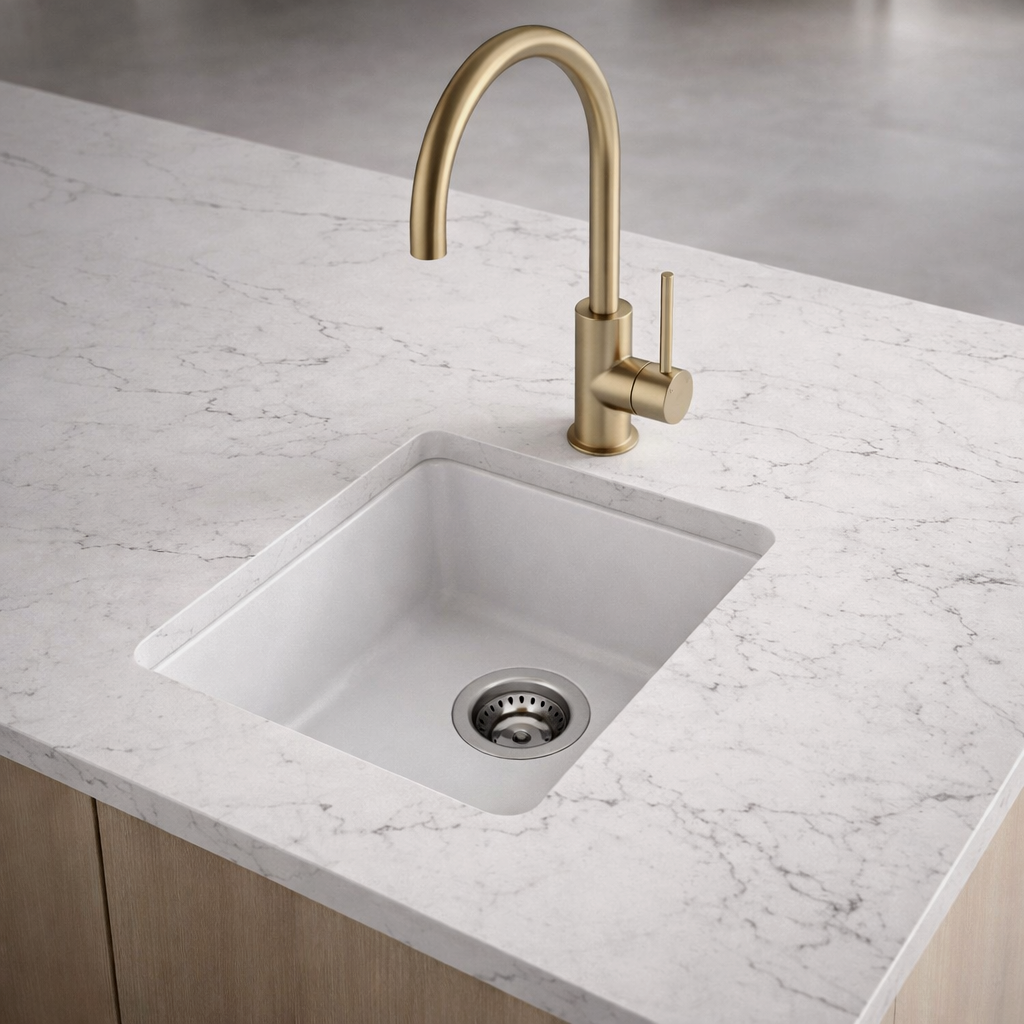
Compact single sinks measuring 450mm by 450mm are common in smaller kitchens, studio apartments, or laundry areas where benchtop real estate is tight. They wash a dinner plate flat but will not accommodate a large baking tray without tilting.
The large single bowl kitchen sink has surged in popularity, with models extending to 800mm in length. These sinks swallow stockpots, roasting pans, and oven trays whole. They suit households that cook in volume, bake regularly, or simply hate the restriction of a divided basin. A large single bowl typically requires a 900mm or wider cabinet, so check your base cabinetry before committing.
Depth deserves attention. The standard 200mm depth works for most people. Deeper models reaching 250mm hold more water and hide more dishes, but they force shorter users to lean further forward, which can strain the lower back over time. If multiple people of different heights use the kitchen, stick closer to 200mm.
Double Bowl Sink Dimensions
Standard double bowl sinks are typically 800mm long and 480mm wide, with two equally sized bowls sitting side by side. Larger configurations reach up to 1160mm by 500mm, demanding a 1200mm cabinet and a generous benchtop footprint.

Double bowls suit households without a dishwasher. One side holds hot soapy water for soaking; the other side provides clean water for rinsing. The workflow is logical, and the division keeps greasy pans separate from delicate glassware. Multi-cook households also benefit when one person washes while another preps vegetables in the second bowl.
The warning label on double bowls is this: each individual bowl is often too small to lay a roasting tray flat. If you cook large Sunday lunches or bake tray after tray of ANZAC biscuits, you may find yourself fighting the centre divider. Measure your largest baking dish and compare it against the internal bowl width of any double sink you consider. Many Australian home cooks have regretted the double bowl decision purely because their largest oven tray never quite fits.
1.5 Bowl Sink Dimensions
The 1.5 bowl sink has become the compromise champion in Australian kitchens. The common overall size is 960mm by 500mm, fitting neatly into a 900mm or 1000mm cabinet. The main bowl spans approximately 400mm to 450mm in length, large enough for pots and pans, while the half-sized bowl runs around 200mm to 300mm.
This configuration offers multitasking ability without the full footprint of a double bowl. You might place a colander in the small bowl for rinsing vegetables while the main bowl stays clear for washing up. Or you might use the half-bowl for food scraps, a drying rack, or a soap dispenser zone. The 1.5 bowl is positioned in the market as the practical middle ground: more flexible than a single, less space-hungry than a double. For Australian families who want prep space alongside a generous washing area, it is frequently the right answer.
How to Measure Your Kitchen for a New Sink
Measuring correctly prevents the expensive mistake of buying a sink that does not fit. Follow these steps in order.
First, measure the internal width of your cabinet, not the benchtop. Open the cupboard door beneath your existing sink and measure the clear space between the cabinet side panels. The sink bowl and its mounting hardware must sit entirely within this cavity. A 900mm benchtop overhang tells you nothing about the cabinet width beneath it.
Second, check the cut-out dimensions required by the sink manufacturer. These are always smaller than the sink's overall rim size. A top-mount sink with an 800mm overall rim might require a cut-out of 760mm by 460mm. The cut-out is what your benchtop installer needs, and it must fall entirely within the cabinet footprint with clearance on all sides.
Third, account for plumbing. The waste pipe, trap, and any garbage disposal unit need clearance behind and below the bowl. Deep sinks leave less room for plumbing underneath, which can become a problem if your cabinet also houses a pull-out bin or filtration system. Check the vertical clearance from the bottom of the sink to the cabinet floor.
Fourth, consider your benchtop material. Stone benchtops require precise templating; once the cut is made, you cannot adjust it. Laminate benchtops require a sealed cut edge to prevent water damage. Discuss your sink choice with your stonemason or cabinetmaker before they cut anything.
Leave at least 50mm of benchtop space on either side of the sink for structural integrity and practical prep space. Less than that and the benchtop strip becomes fragile, prone to cracking, and functionally useless.
Single vs. Double vs. 1.5 Bowl: Which Configuration Is Right for You?
The bowl configuration you choose should reflect how you actually cook and clean, not how you imagine you might one day.
When to Choose a Large Single Bowl
A large single bowl kitchen sink is the top recommendation for serious home cooks in 2026. If your kitchen regularly sees stockpots, large frying pans, baking trays, and oven racks, the uninterrupted width of a single bowl makes washing these items straightforward. There is no centre divider to work around, no cramped half-bowl to ignore.
Single bowls also make sense when you have a dishwasher. The dishwasher handles the rinsing and sanitising; the sink handles the soaking and scrubbing. A second bowl becomes redundant. The single bowl maximises the washing area within your available cabinet width, giving you the deepest possible basin for the space you have.
When to Choose a Double Bowl
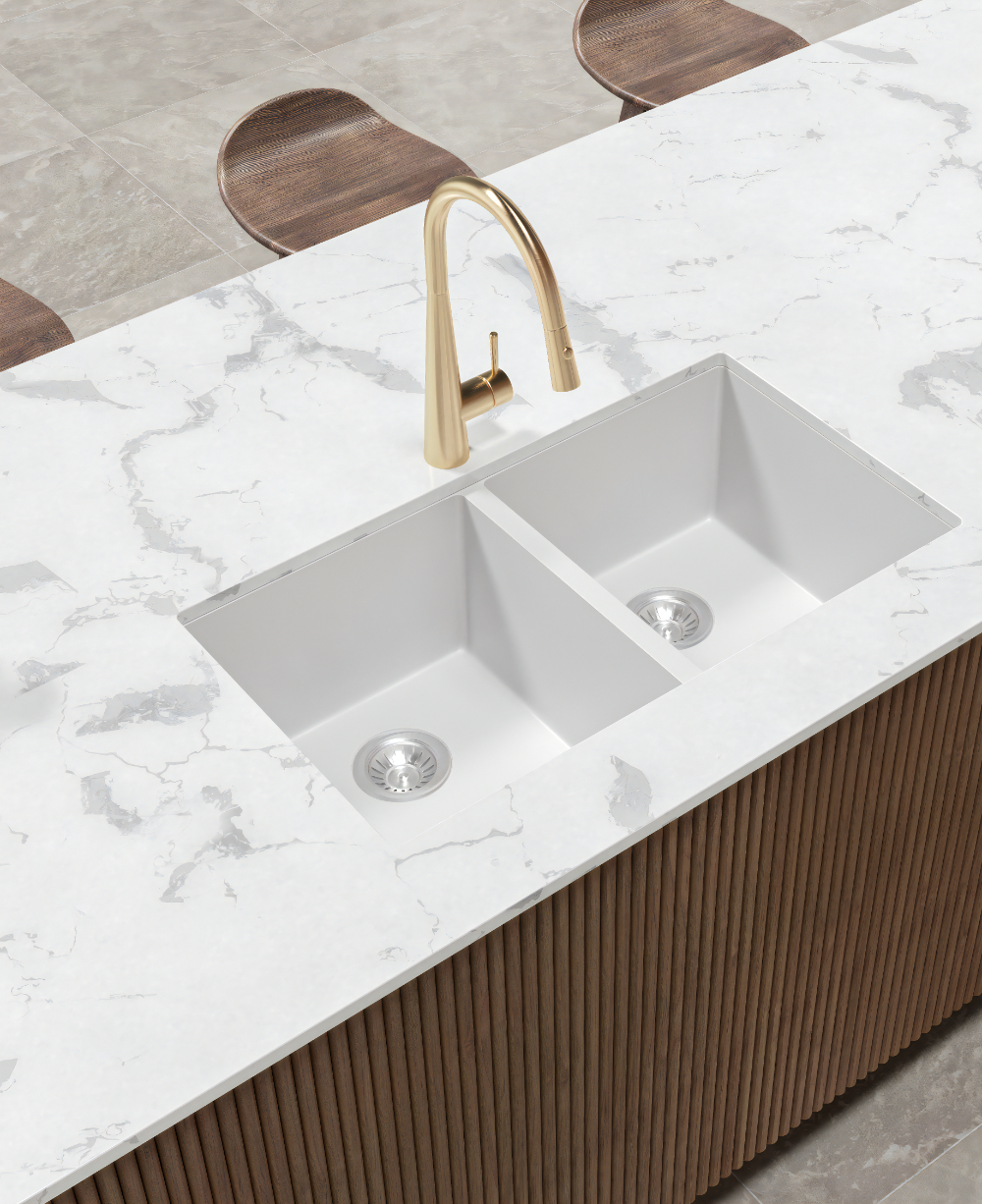
Double bowls still earn their place in households without a dishwasher. The two-basin workflow, one for washing, one for rinsing, is efficient and familiar. If you hand-wash dishes after every meal, the double bowl keeps the process contained and organised.
Multi-cook households also benefit. One person can scrub potatoes in the left bowl while another drains pasta in the right. The division of labour is literal.
The trade-off is cabinet width. A double bowl requires a minimum 900mm cabinet, and ideally a 1200mm cabinet for the larger models. Each individual bowl is smaller than a single bowl would be in the same footprint. Before committing, measure your largest roasting tray and check whether it fits flat in one bowl of the double sink you are considering. If it does not, you may be happier with a large single or a 1.5 bowl.
When to Choose a 1.5 Bowl
The 1.5 bowl is the pragmatic choice for the average Australian family. It fits a standard 900mm cabinet, making it a drop-in replacement for many existing sinks without cabinet modifications. The main bowl handles large items; the half-bowl handles side tasks like straining, drying, or waste collection.
This configuration shines in kitchens where one person does most of the cooking and cleaning but occasionally needs a second zone for a specific task. It is not a full double bowl, and it does not pretend to be. It is a single bowl with a helper, and for many households, that is exactly the right balance.
Mounting Styles and Their Impact on Sink Size
How your sink mounts to the benchtop affects the visual result, the usable benchtop space, and the installation complexity.
Top-mount sinks, also called drop-in sinks, sit with their rim resting on the benchtop surface. They are the easiest to install and work with any benchtop material, including laminate. The visible rim takes up a few millimetres of benchtop space and can trap grime along its edge, but for budget-conscious renovations, top-mount is the straightforward choice.
Undermount sinks attach beneath the benchtop, creating a seamless edge where the benchtop material runs right to the sink opening. This maximises benchtop space because there is no rim interrupting the surface. Wiping crumbs and spills directly into the sink is satisfyingly easy. Undermount installation requires a solid benchtop material, stone, engineered stone, or solid surface, and may need cabinet reinforcement for heavy sinks. Fireclay and composite granite undermount sinks are particularly weighty; your cabinet base must be rated to support the load.
Flush mount sinks sit with their rim perfectly level with the benchtop surface. This is a high-end look requiring expert templating and installation. The result is striking but the cost reflects the precision involved.
Farmhouse or apron-front sinks extend forward beyond the cabinet face, exposing a decorative front panel. They require a custom cabinet or a modified standard cabinet, and they often limit your depth options because the exposed front dictates a specific bowl height. Farmhouse sinks make a design statement, but they demand commitment to the look and the budget.
A note on weight that many guides skip: an undermount fireclay sink can weigh 40 kilograms or more before you add water and dishes. Your cabinet must be reinforced to carry that load permanently. Stone benchtops can crack if the sink is not properly supported from below. Discuss weight with your installer before choosing a heavy undermount model.
Material Matters: How Your Choice Affects Size and Durability
Stainless steel dominates Australian kitchens for good reason. It is lightweight, affordable, and available in a vast range of sizes. The detail that matters most is gauge thickness. A 16-gauge stainless steel sink is thicker and more resistant to dents and noise than an 18-gauge model. The lower the gauge number, the thicker the steel. For a sink you plan to use for a decade or more, choose 16-gauge. Popular Australian brands include Franke, Blanco, Oliveri, and Abey, all of which offer multiple gauge options across their ranges.
Fireclay sinks are heavy, durable, and highly resistant to heat and scratches. A hot pot straight off the cooktop will not damage a fireclay surface. The trade-off is weight and limited size availability. Fireclay sinks come in specific dimensions; you cannot order a custom width. They require reinforced cabinetry and professional installation.
Composite granite and quartz sinks resist scratches and stains while offering a matte, contemporary look. They are heavy like fireclay but available in a wider range of sizes and colours. Expect to pay more than stainless steel, but the durability and aesthetic appeal justify the cost for many renovators.
Ceramic sinks deliver a classic, glossy finish that suits traditional and farmhouse-style kitchens. They are prone to chipping if heavy pots are dropped, and they are often limited to top-mount installation. Handle with care during use and installation.
Sink Placement and Workflow Tips for Australian Kitchens
Where you place the sink within the kitchen affects how the whole room functions. The classic work triangle positions the sink between the cooktop and the refrigerator, minimising steps between the three busiest zones. If your layout allows it, follow this principle.
Window alignment matters more than most people realise. A sink centred under a window creates a focal point that feels deliberate. If your window is 1200mm wide, a 600mm single bowl can look undersized; a 900mm or larger sink fills the visual space more satisfyingly. This sink-to-window proportioning is a detail that separates well-designed kitchens from those that feel slightly off.
Drainer side is a practical choice often overlooked. If you are right-handed, a right-hand drainer lets you stack wet dishes to the right while you wash with your dominant hand. Left-handed users typically prefer the opposite. Think about where your dishwasher sits: you want the drainer on the side closest to the dishwasher for easy transfer.
Sink placement psychology is worth considering. A sink facing the room allows the person washing up to talk to family or guests, maintaining social connection. A sink facing a window offers a view and natural light but turns the user's back to the room and can hide dish clutter from guests. Neither is wrong; the right choice depends on how you use your kitchen socially.
For multi-cook households, consider installing two separate single-bowl sinks instead of one large double. A main sink for washing and a secondary linear sink for drinks, ice, or vegetable prep can transform how multiple people move through the kitchen without getting in each other's way.
Common Sink Size Mistakes to Avoid
The first mistake is buying a sink that is too deep. Bowls deeper than 250mm force you to lean forward and down, straining your lower back with every wash. The extra depth also increases splashing because water falls further before hitting the basin.
The second mistake is assuming a double bowl is always an upgrade. Many renovators choose a double bowl only to discover that neither side fits a large frying pan flat. If you cook with big cookware, a large single bowl is usually the better call.
The third mistake is measuring the benchtop instead of the cabinet interior. The benchtop overhangs the cabinet; the sink must fit inside the cabinet carcass. Measure inside the cupboard, not across the benchtop surface.
The fourth mistake is ignoring drainer position relative to the tap and dishwasher. A drainer on the wrong side creates awkward reaching and dripping across the benchtop. Think through your workflow before the cut-out is made.
The fifth mistake is choosing a heavy material without confirming cabinet support. An undermount fireclay or composite sink can crack a stone benchtop or collapse an unreinforced cabinet if the weight is not properly carried. Ask your installer to assess the cabinet structure.
Budgeting for Your New Sink (Installation and Accessories)
A basic single bowl stainless steel sink starts around $150 to $300. A large single bowl or a quality double bowl runs from $400 to $800. Premium materials like fireclay or composite granite can exceed $1,000, and that is before installation.
Professional plumbing installation in Australia typically costs between $200 and $500 depending on whether you are replacing an existing sink in the same footprint or cutting a new benchtop opening. A new cut-out costs more, especially in stone, because it requires a stonemason in addition to the plumber.
Accessories add up. Budget for a strainer, a colander that fits your specific sink model, a cutting board sized to sit over the bowl, and possibly an integrated soap dispenser. These items improve daily usability but can add $100 to $300 to the total.
Where should you splurge and where should you save? Spend on gauge thickness and soundproofing: a 16-gauge stainless steel sink with sound-dampening pads will feel solid and quiet for years. Save on mounting style if you have a laminate benchtop; top-mount is perfectly functional and far cheaper to install than undermount in that context.
Frequently Asked Questions About Kitchen Sink Sizes
What is the most popular kitchen sink size in Australia? The 600mm single bowl and the 900mm 1.5 bowl are the most common replacements in existing kitchens. They fit standard cabinetry without modification.
Can I fit a 900mm sink in an 800mm cabinet? No. The sink must be smaller than the cabinet interior width. A 900mm sink requires at least a 900mm cabinet, and often a 1000mm cabinet to leave clearance for mounting hardware.
What is the best sink size for a small kitchen? A 450mm to 550mm single bowl sink paired with a draining rack that sits on the benchtop gives you washing capacity without consuming limited prep space.
Are deeper sinks better? Not always. A 200mm depth is standard and comfortable for most users. A 250mm depth holds more but can cause back strain, especially for shorter family members.
Do I need a double bowl if I have a dishwasher? No. A large single bowl is usually more practical when the dishwasher handles rinsing and sanitising. The single bowl gives you maximum space for soaking and scrubbing large items.
Final Checklist Before You Buy
Measure your cabinet interior width, not the benchtop. Confirm the sink's cut-out dimensions from the manufacturer's specification sheet. Choose your bowl configuration based on how you actually cook and whether you use a dishwasher. Select a mounting style compatible with your benchtop material. Check the sink's weight and ensure your cabinet can support it, especially for undermount installations. Decide on drainer side, left or right, based on your handedness and dishwasher position. Set a budget that includes the sink, installation labour, and the accessories you will use every day. Work through this list and you will buy a sink that fits your kitchen, your life, and your budget without regret.
